Eating Rules: Guide to the Nutrition Facts Panel

When I met Andrew Wilder, he was gearing up to launch his October: Unprocessed challenge and I knew we had an instant connection to demystify food and health. Andrew  is a healthy foodie who believes that although diet and nutrition information is complicated, eating healthful, delicious food doesn’t have to be.  He writes about all this and more on his blog, Eating Rules. Follow Andrew on Twitter @eatingrules or find him on Facebook.

Guide to the Nutrition Facts Panel


Once you get in the habit of reading nutrition labels, it becomes like a game. If you know what to look for, you’ll start to see patterns emerge and will be able to tell very quickly if a food is good for you or if it’s full of junk. So before you put that new box of food in your shopping cart, please ignore all the marketing claims on the front, flip the box over, and check out the nutrition facts.

My introductory guide to reading the nutrition facts label is a fun, one-page diagram, designed to give you a quick overview of what I look for on the label. I’m grateful to Nimisha for giving me the opportunity to expand a bit on a few of the points here. I’m a big believer that “knowledge is power” — so I hope that you’ll find some power in the information below.

1. Read the ingredients list first.
This is the best way to know what you’re putting in your body. Ingredients must be sorted by order of descending quantity, so there’s more of the first ingredient than any other single ingredient.  Some ingredients may have sub-ingredients, which are indicated in parentheses or brackets.

TIP: Different types of sugar can be listed separately. In the sample label on the PDF, Enriched Flour is followed by Corn Syrup, High Fructose Corn Syrup, and Dextrose. It’s very likely that there’s actually more sugar than flour in that product.

2.Memorize the footer information.
The “footer” information is identical on every label. Although it’s generic, it works well as a basic guideline.  In general, women should consume around 2,000 calories a day, and men around 2,500.

Many factors influence this number, including gender, age, activity level, general health, etc., but this is a good place to start. Memorize the appropriate column for you, and then you never have to look at this section of the label every again. (Find some online calorie calculators here).

3. Servings vs. Portions.
There are no precise rules about what companies can say constitutes a “serving,” so it’s sometimes hard to compare products. They are, however, required to show the number of servings per container. Keep in mind that a serving may be different than a portion.  An appropriate serving of meat is four ounces — but a steak served at a restaurant may be eight or more ounces. Be realistic about how many servings you’re actually going to eat.

4. Calories are still king.
If you know how many calories you should eat in a day, and you know how many calories are in a serving, then it just takes some basic math to figure out if this food fits well into your overall diet  A snack should probably be no more than around 200 calories.  TIP: Most whole fruits — a perfect snack from mother nature — are around 100 calories.

5. So much salt!
Sadly, most packaged foods have waaaaaay too much sodium. If a product has more milligrams of sodium than it does calories, it’s probably too high. It’s somewhat unrealistic in the current food climate to think you can do better with packaged foods, but it’s still a good guideline to keep your eye on,  TIP: Breads and soups are the worst offenders, so watch those extra carefully.

6. Fiber is fabulous.
It’s generally true that the more naturally-occurring fiber in a food, the better it is for you. But beware: Manufacturers now add fiber to many products, and there’s no distinction on the label.  If you see inulin, polydextrose, maltodextrin, or modified wheat starch in the ingredients list, it’s got added fiber. Though it’s not likely to hurt, and may indeed be good, the benefits of this extra fiber are not yet proven. Aim to eat 25-38 grams of naturally-occurring fiber every day from whole grains, nuts, seeds, and fresh fruits & vegetables. Learn more from my Fiber Primer.

7. Sugar is sugar.
Unfortunately, the nutrition label doesn’t distinguish between naturally-occurring sugars and added sugars, so it’s simplest just to assume less is better.  TIP: There’s about four grams of sugar in a teaspoon of regular table sugar, so divide the number shown on the label by four and visualize that many teaspoons of sugar. Still hungry?

8. Pack on the protein.
Dietary recommendations on protein vary widely, but the easiest guideline I’ve found is to aim for about ½ gram of protein per pound of body weight each day. (Example: A 160-pound person should eat about 80 grams a day). Remember, it’s important get your protein from a variety of sources. Look for beans & legumes, nuts, whole grains, low-fat dairy, and smaller portions of lean meats.

9. Fat Fallacy.
Not all fats are bad (and some are even good), and eating fat doesn’t necessarily mean you’ll get fat. Avoid man-made trans fats like the plague, and watch out for the trans fat loophole: If a food has partially-hydrogenated or hydrogenated oils in the ingredients, it has trans fats! (The number shown can be rounded down to zero). Polyunsaturated fats are the good stuff, but mono-unsaturated fats are okay, too. TIP: Fat has 9 calories per gram (carbs and protein each have around 4), so more fat does mean more calories.

10. Vitameatavegamin?
Of course it’s important to get your daily dose of vitamins and minerals, but I don’t usually give this area of the label more than a passing glance. Are you really going to sit there and tally up your vitamin and mineral intake?  If you know you’re deficient in a particular one (or more), then you should definitely do it.  But otherwise, if you’re going to count something, it’s probably more worthwhile to count calories and naturally-occurring fiber. Eat a lot of different whole fruits & veggies, and you’ll do better than trying to get all your vitamins and minerals from a packaged food.

This is not intended to be a comprehensive guide or to replace any qualified medical advice. It’s just an overview, and I’ve left lots of important stuff out. For more in-depth information, check out the FDA’s Consumer Nutrition and Health Information.

Don’t Hate The Brussels Sprouts (with recipe)

Follow me on Twitter or Facebook.

Brussels sprouts are my new favorite vegetable and they are in season right now! You might just be turned off from the title of this post, but I urge you to give fresh Brussels sprouts a try. I can’t remember the actual moment I fell in love with the cute yet oddly shaped vegetables, but it was only a year ago. Last winter, I noticed them in the grocery stores, farmers markets, and restaurants. I must have ordered Brussels sprouts at one of San Francisco’s  gourmet restaurants and decided that I had to recreate the dish at home. Aside from being super nutritious, they are really delicious if cooked properly. Another added bonus: Brussels sprouts take just as much time as cooking pasta and don’t require lots of prep work. Follow these simple Brussels sprouts tips to get you started on a positive relationship with the little green veggies.

1. Buy fresh and seasonal Brussels sprouts.
2. Use real butter or high quality olive oil.
3. Steam or boil them for at 3-4 minutes to remove bitterness
4. Add roasted nuts and seeds to enhance flavor and texture.  Try pecans, hazelnuts, or pine nuts.
5. Dried fruits and lemon juice also enhance flavor and texture. Try cranberries, pomegranates, or dried figs.
6. Lemon zest and lemon juice enhance the flavor of almost any dish, without fail. Use fresh lemons.

Sautéed Brussels Sprouts with Dill and Dates

Recently, I went to a cooking demo given by a friend, Teresa Piro, at We Olive SF. Teresa combined dill with Brussels sprouts, which inspired me for this recipe. This dish is elegant to serve as a side dish for a holiday meal yet simple enough to eat on a regular basis.

Ingredients
2 lbs Brussel sprouts, washed and trimmed
¼ cup Extra Virgin Olive Oil*
4-5 medjool dates, quartered
3 sprigs of fresh dill, washed and finely chopped
1 tbsp fresh (Meyer) lemon juice
½ cup of pecans, toasted and coarsely ground
1 tbs flaxseeds or sesame seeds
Sea salt
Pepper

Method

1. Fill a large pot ½ full with water. Bring to a boil over high heat.  Add the  Brussels sprouts to the boiling water and cook for 3-5 minutes. Or steam them using a vegetable steamer for 5 minutes.  Drain the Brussels sprouts in a colander and rinse under cold running water to stop them from cooking any further. Cut Brussels sprouts in half length-wise and set aside.


2. Heat the oil in a large heavy-bottomed skillet over medium heat. Add Brussels sprouts and a pinch of sea salt and cook, stirring often, until edges begin to brown, about 5 minutes. Remove from heat.

3. Pour lemon juice over sprouts and stir well. Toss in the pecans, flaxseeds, dill and dates. Season to taste with salt and pepper.

*You can also use a pure lemon flavored olive oil

Did you know that Club Dine In! is on Twitter and Facebook? Follow @clubdinein for daily health, fitness, and social news, recipes and delicious tips! Join the Club Dine In! community on Facebook to connect with like-minded individuals and find out about exclusive Club Dine! events.

Thanksgiving Without The Guilt

For the last 25 days you have 1) talked, thought, tested out recipes, and shopped non-stop for this meal  2) salivated over all the food blogs and TV shows, hoping someone can cook all that up for you 3) secretly dreaded the meal because you know it will mess with your health goals.

Family Meal

Image by _dbr via Flickr

It really is wonderful that you have been more conscious of your health and weight. You have made changes that will help you reach your health goals and  you have been on track for sometime now. If you really have been on track, eating well and being active regularly, then fear not. Even if you have not been on track, still fear not.  Thanksgiving is just one day and it is just one meal. It is the one day that you can allow yourself to enjoy creamy mashed potatoes,  turkey gravy, macaroni and cheese, and decadent desserts.  Here are some basic tips for healthy eating:

1. Enjoy the atmosphere. Take in the sights and smells of the food. Talk to the people at the dinner table.

2. Fill up your plate once and eat slowly. Bite, put your fork down, chew,  enjoy the conversations, then bite again. Slowing down helps you digest and you can actually enjoy the taste of the food. If you are still hungry, go for seconds of  only what you really only want to eat.

3.  Leave room for dessert. Instead of saying “There’s always room for dessert,” actually leave room for it. Eat a little less of everything else so you can have a piece of that pie with whip cream sans guilt.

4. Start the day with a workout, brisk walk, or anything active that will help kick-start your metabolism. If you are too busy cooking, cleaning, or driving, just do 10 jumping jacks. That may not seem like a lot, but it’s better than nothing, will make you feel better, and it only takes 60 seconds. Or suggest the family go for a walk after the meal instead of sitting down in front of the television.

Overall, it is just one meal.  If you overeat, don’t be so hard on yourself. It will not kill you or throw so off track that you can’t get back on. Your metabolism will adjust and you will burn off the extra 200 calories. Plus, you can get back to eating regularly and staying active the next day. Stop thinking about Thanksgiving as only about food and think about all that you have to be thankful for. It’s a time when you sit down and share the grand meal with people who mean something to you. Enjoy that thought. Happy Thanksgiving.

Earl Grey Cranberry Sauce with Dates

While thinking about how original I can get with the millions of cranberry recipes out there, it struck me like a bolt of lightning.  Okay,  I am being dramatic, but it was that exciting. A few months ago, I made … Continue reading

Taking the Can Out Of Cranberries

Deliciously shaped.

Image via Wikipedia

Follow me on Twitter

Canned cranberries. I thought that was the only way it goes, never even having seeing cranberries in their fruit form. Then sometime 5-6 years ago, I saw Ocean Spray whole cranberries being sold at a supermarket. I popped one in my mouth and was really sorry. I always thought cranberries were really sweet, but was I wrong! I would have never guessed that cranberries were so bitter because they are super, duper sweet when coming out of the can. I examined the ingredients and nutritional information on the can and compared it to the whole, fresh cranberries. Here is what I found:

Canned Cranberry Sauce
Cranberries, High Fructose Corn Syrup, Water, Corn Syrup and Citric Acid

Whole Cranberries
Cranberries

Simple, Homemade Cranberry Sauce
Cranberries, water, sugar

Notice the significant difference between the ingredients used to make homemade cranberry sauce and the canned stuff. Sugar is not exactly the same as high fructose corn syrup (HFCS) and corn syrup. HFCS are created in a lab and does not come from the earth.  If you wish to believe the advertisements and propaganda put on by the industry, who have a lot of money to spare, I will not debate here.  By the way, the industry is calling HFCS and corn syrup “corn sugar nowadays to make it harmless and simple. You can decide for yourself. It’s just bad for you and it’s in virtually every packaged, processed, pre-made product.  The important message here is that you can control the amount of sugar you eat if you make the food at home. You can also choose sugar alternatives (Muscovado sugar, coconut palm nectar, dates, raisins, Agave nectar, raw honey, Stevia).  Also, another thing that everyone should be concerned with is Bisphenol A. BPA needs its own post(s) altogether, but everyone should be cautious of it as it has been linked to breast cancer, prostate cancer, obesity, just to name a few. BPA is used to line canned and pre-packaged food, which leaches into the food.

Cranberry sauce has to be the easiest Thanksgiving dish, ever. Of course, you can tap into you creative side and jazz it up by adding one or many spices, orange juice, or anything else you seem fit. I started taking pride in making my  cranberry sauce when I read the recipe on the back of Trader Joe’s cranberries and the sight of canned cranberries just make me a little uneasy. Also, cranberry sauce can be made well in advance and actually thickens in the fridge. It’s also super easy (and cheap) to take to potlucks. Check out the recipes below on how to make your own cranberry sauce. Also, if you want to really surprise your guests, try my Earl Grey Cranberry Sauce with Dates.

Simple
Homemade Cranberry Sauce– by Pioneer Woman (who won the Thanksgiving Throwdown against Bobby Flay)
Gingered Cranberry by Sauce by Closet Cooking
Jellied Cranberry Sauce by The Bitten Word

Creative
Earl Grey Cranberry Sauce with Dates by Club Dine In!
Bourbon Cranberry Sauce by The Craving Chronicles.

via 5 Second Rule

Did you know that Club Dine In! is on Twitter and Facebook? Follow @clubdinein for daily health, fitness, and social news, recipes and delicious tips! Join the Club Dine In! community on Facebook to connect with like-minded individuals and find out about exclusive Club Dine! events.

Thanksgiving Side Dish: Potatoes Continued

Follow me on Twitter

Yesterday, I stated a strong case for staying away from instant mashed potatoes. Potatoes in a box are not wholesome, real food. Instead, they are just chemicals made to fool your sensory perception. Anyway, making mashed potatoes from scratch is not that hard and they are absolutely delicious. Checkout these wonderful mashed potato recipes gathered from other foodies:

Basic

Simple Mashed Potatoes by Use Real Butter
Garlic Mashed Potatoes by 23 and Grain Free
Mashed Sweet Potatoes by Delish.com
Creamy Mashed Potatoes by Pioneer Woman (she beat Bobby Flay on Thanksgiving Throwdown) I suggest using unprocessed cream cheese.

Creative

Kale Mashed Potatoes by Cate’s World Kitchen
Fluffy Pesto Mashed Potatoes by Kayotic Kitchen
Kale and Olive Oil Mashed Potatoes by 101 Cookbooks\
Pumpkin Mashed Potatoes by Cake, Batter, Bowl

Image via Cake, Batter, and Bowl

Did you know that Club Dine In! is on Twitter and Facebook? Follow @clubdinein for daily health, fitness, and social news, recipes and delicious tips! Join the Club Dine In! community on Facebook to connect with like-minded individuals and find out about exclusive Club Dine! events.

Thanksgiving Side Dish: Potatoes Mashed or Not

Follow me on Twitter Mashed potatoes are delicious, but they do take some (messy) prep work  and time which may make you resort the the instant stuff for your side-dish. Instant potatoes have been an American staple for decades. They … Continue reading

Community Through Kindness and Food

Follow me on Twitter or Facebook.

“The joys of the table belong equally to all ages, conditions, countries and times; they mix with all other pleasures, and remain the last to console us for their loss.” – Jean Antheleme Brillat-Savarin

During Fair-Trade month, I had the pleasure of having lunch with eight staff members from Fair Trade USA at their office  in Oakland, CA. When I was asked to join them, I imagined dark cubicles and a tiny office kitchen that consisted of only a microwave, tiny sink, and coffee pot (reminiscent of my days working in clinical research). Though, I was pleasantly welcomed into a large, lofty, bright office floor with a large, separate dining room with a pretty decent kitchen. Albeit, sans stove. The participating colleagues sit down every Wednesday and enjoy a relaxing, homemade vegetarian/vegan lunch together. On a rotating weekly schedule, one person brings a homemade lunch to share with rest of the group. The meals are vegetarian/vegan, since it suits everyone’s dietary needs and is environmentally friendly.  The group also try to use as many Fair-Trade ingredients in the meal as possible and even make a friendly competition out of it. According to Katie Barrow, Fair-Trade PR Manager, cupcakes and baked goods are the easiest since you can use Fair-Trade spices, chocolate, vanilla, and sugar. She had also made Fair-Trade vegan cupcakes to share with Club Dine In! in honor of Fair Trade Month. During lunch, we conversed lightly about our common interests in sustainability and television commercials.

A dining table is not only a place where we eat food, but it’s where we can connect, build, and maintain relationships. It is also the easiest place to make positive impacts locally and globally. When we make sustainable food choices,  we positively impact farmers, communities, the environment, and ourselves. We have to eat anyway, so why not do some good at the same time!

The communal kitchen

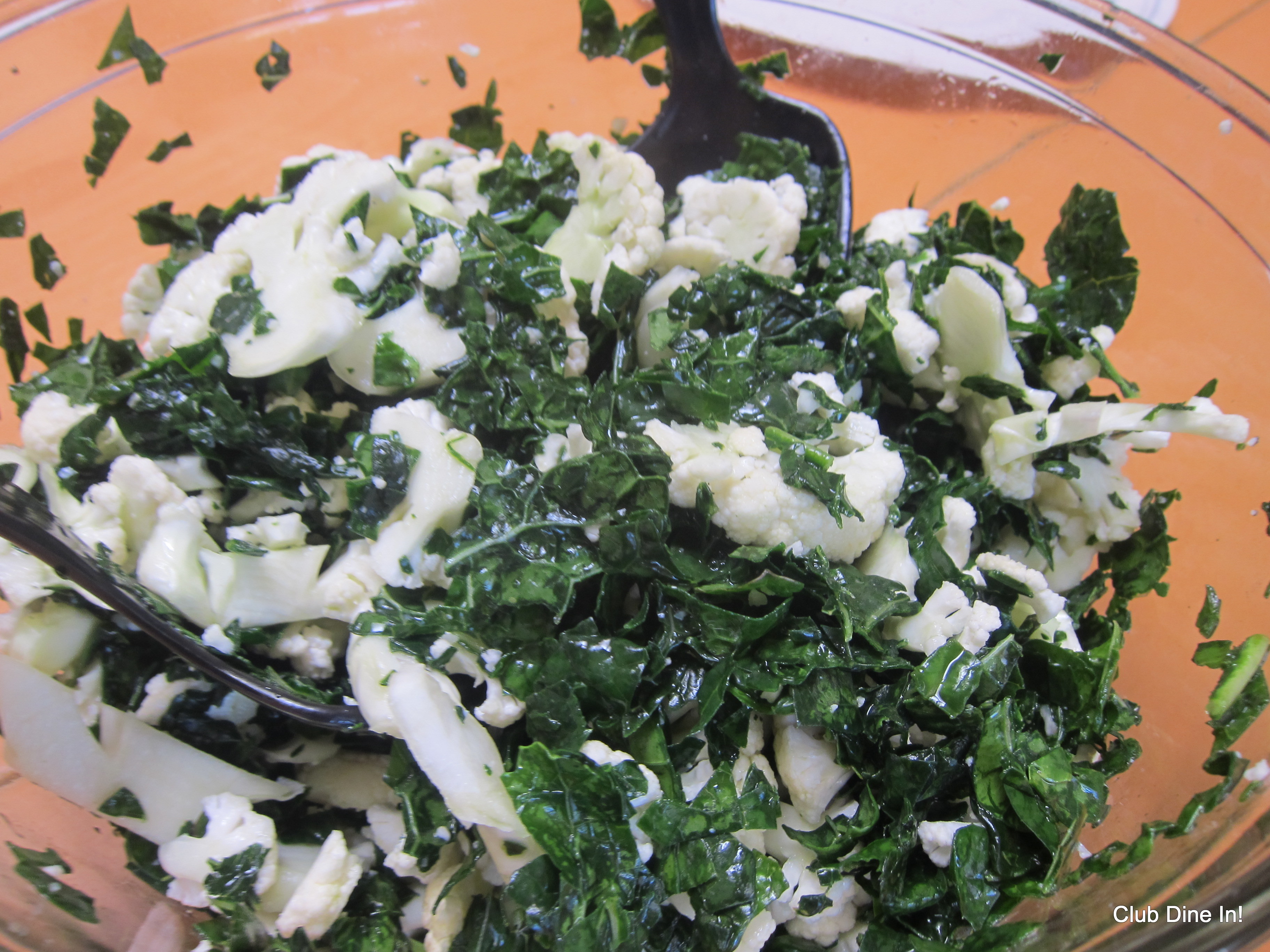
Raw Kale and Cauliflower Salad from the cookbook The Vegan Table by Colleen Patrick Goudreau.

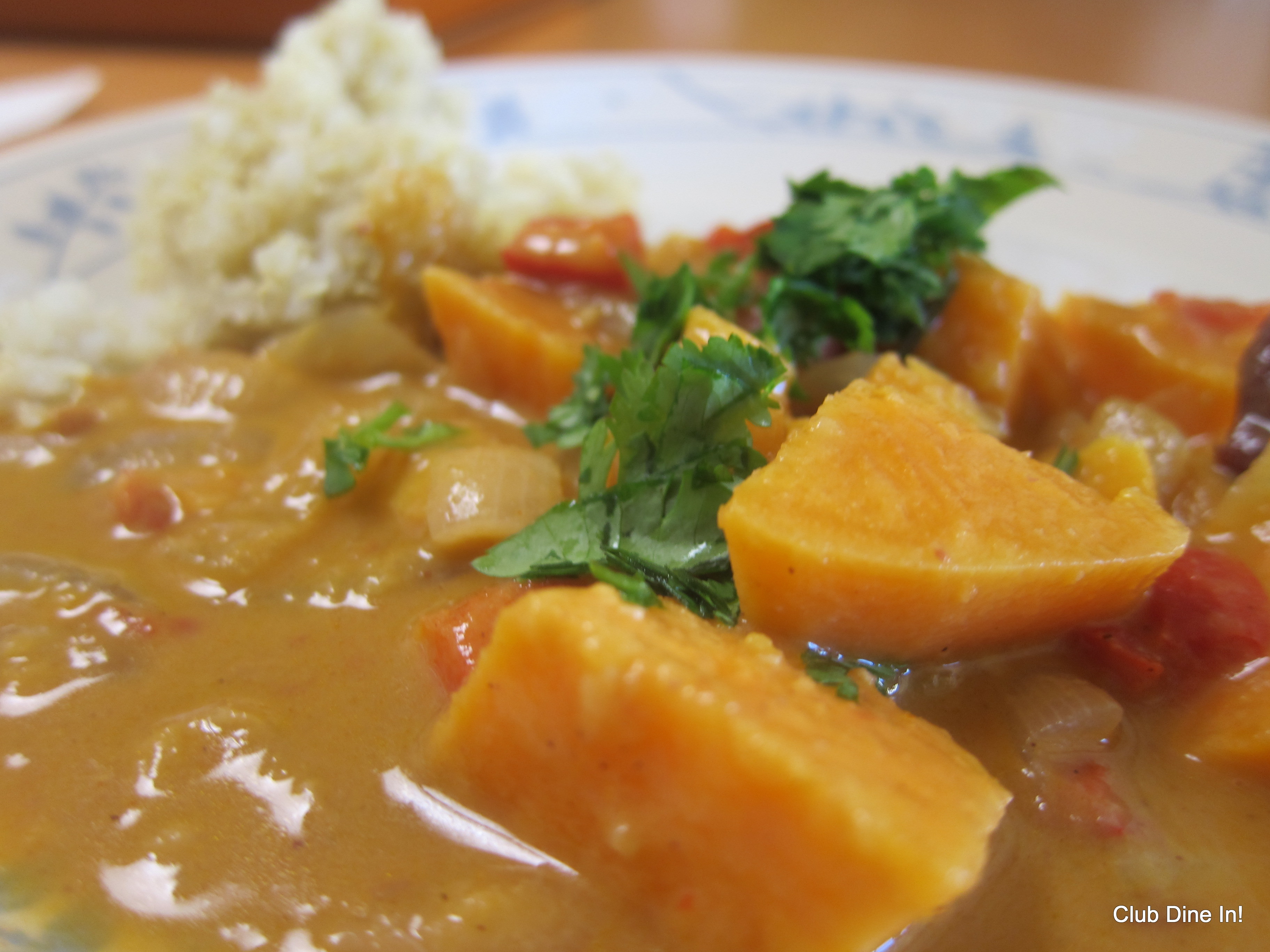
.African Sweet Potato and Peanut Stew from the cookbook The Vegan Table by Colleen Patrick Goudreau.

We had a delicious lunch of sweet potato stew, kale and cauliflower salad, and quinoa.

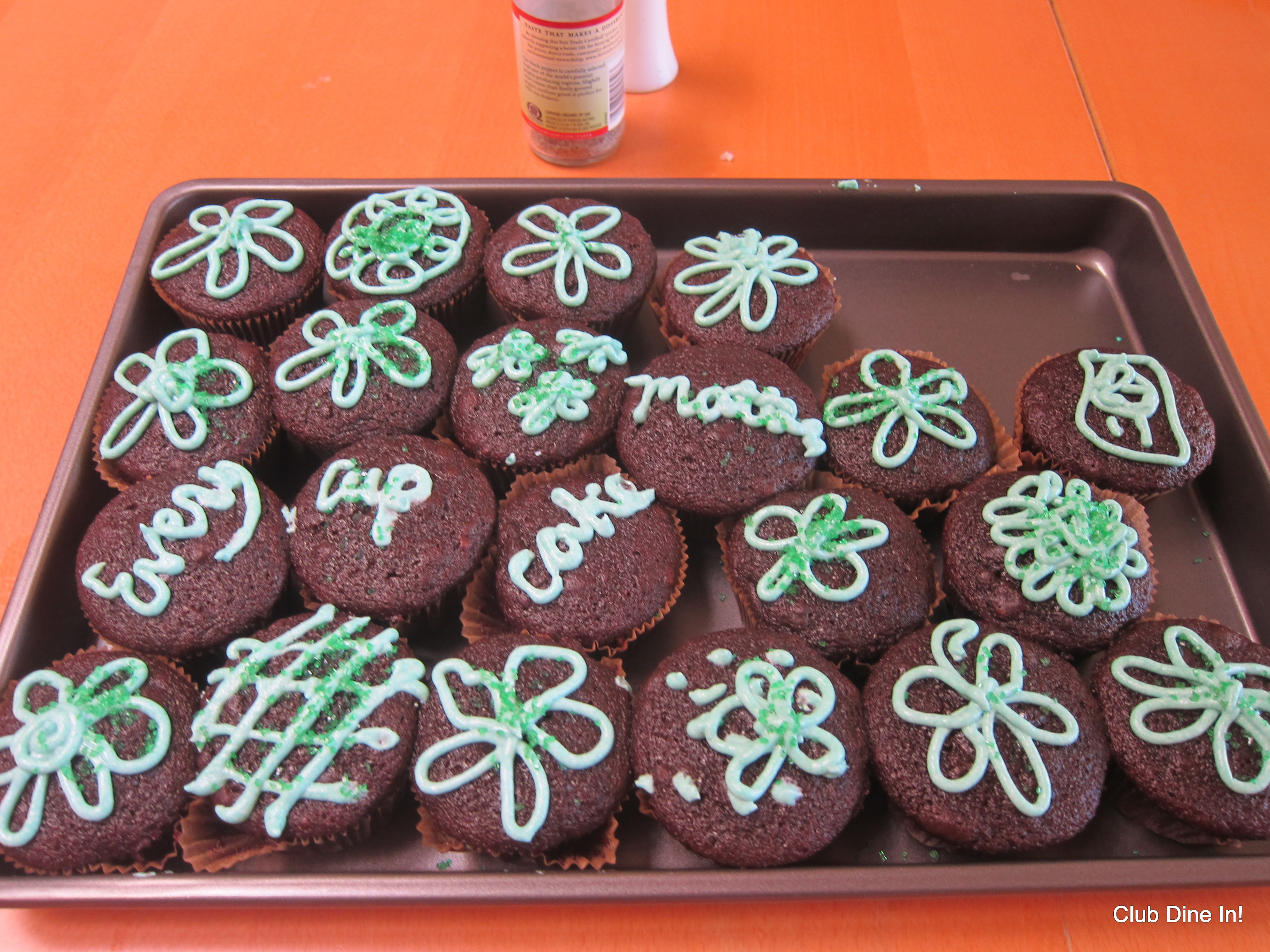
Every Cup Cake Matters, made with fair-trade cocoa, sugar, and vanilla and chocolate chips.


*Fair Trade Month unites Fair Trade USA’s diverse corporate, nonprofit  and individual across the United States to generate awareness of Fair Trade’s comprehensive approach to social, economic and environmental empowerment and sustainability among farming communities in the developing world. Find out how you can get involved and or what small changes you can make to support the movement here.

Did you know that Club Dine In! is on Twitter and Facebook? Follow @clubdinein for daily health, fitness, and social news, recipes and delicious tips! Join the Club Dine In! community on Facebook to connect with like-minded individuals and find out about exclusive Club Dine! events.

Treat Treats As Treats

“Treat treats as treats.”– Micheal Pollan

Anyone who knows me, knows that I have the biggest sweet tooth. I am not so much of a candy person as I am of baked treats. However, it was a long time ago that I was able to metabolize and burn off all the extra fat and sugar. Also, I started becoming more aware of processed and unprocessed foods. I was grossed out when I learned that I was literally putting cancer causing, toxic chemicals in body in the form of preservatives from candy and packaged sweets. Also, it seemed like high-fructose corn syrup or now corn syrup was just plain hard to avoid. Whether HFCS is bad for you or not, any type of processed sugar is bad in the long run. Therefore, it’s best to minimize overall sugar intake. Desserts (including candy) are special occasion food and should be treated as such.

Did you know that Club Dine In! is on Twitter and Facebook? Follow @clubdinein for daily health, fitness, and social news, recipes and delicious tips! Join the Club Dine In! community on Facebook to connect with like-minded individuals and find out about exclusive Club Dine! events.